
Pec strain rehabilitation focuses on restoring function, utilizing PDF guides for structured recovery. These exercises address muscle damage,
promoting healing and preventing re-injury through progressive phases.
Understanding Pec Strain
Pectoralis major and minor strains, commonly known as pec strains, involve tears in the chest muscle fibers. These injuries range in severity from mild (Grade 1 – a few stretched fibers) to severe (Grade 3 – a complete muscle rupture). Understanding the specific grade of your strain, often determined through medical evaluation and potentially imaging, is crucial for tailoring a rehabilitation program.
PDF resources dedicated to pec strain rehab often detail these grading systems and their implications for recovery timelines. Symptoms include sudden sharp chest pain, swelling, bruising, and difficulty with movements like pushing or lifting. A proper diagnosis is essential to rule out more serious conditions like a fractured rib or cardiac issues. Early intervention, guided by a PDF outlining appropriate exercises, can significantly improve outcomes and accelerate your return to activity. Ignoring the strain can lead to chronic pain and reduced functionality.
Causes of Pec Strain
Pec strains typically arise from forceful contractions or overstretching of the pectoral muscles. Common causes include weightlifting with improper form, particularly during bench pressing or flyes, and direct blows to the chest. Sudden acceleration or deceleration movements, like those in contact sports, can also contribute. Insufficient warm-up before exercise and inadequate flexibility in the chest and shoulder muscles increase vulnerability.
PDF guides on pec strain rehabilitation emphasize identifying and addressing these contributing factors. Overuse, repetitive motions, and muscle imbalances can also play a role. Individuals with pre-existing muscle weaknesses or imbalances are at higher risk. A comprehensive PDF resource will often include preventative measures, alongside the rehab exercises, to minimize the chance of recurrence. Understanding the root cause is vital for a successful recovery and long-term chest muscle health.

Phase 1: Acute Phase (Days 1-7)
Initial recovery, guided by PDF resources, prioritizes rest, ice, and minimizing inflammation. Gentle movements begin cautiously, avoiding pain, to maintain some range of motion.
Rest and Ice Application

Initial management of a pec strain, detailed in many PDF rehabilitation guides, centers around minimizing further injury and controlling inflammation. Complete rest from activities that aggravate the pain is paramount during the first 24-72 hours. This doesn’t necessarily mean complete immobilization, but avoiding any movements that cause discomfort is crucial.
Ice application is a cornerstone of acute pec strain treatment. Apply ice packs, wrapped in a thin towel to protect the skin, for 15-20 minutes at a time, every 2-3 hours. Ice helps to reduce pain, swelling, and muscle spasm. Consistent icing during this phase is vital for optimal recovery. Remember to never apply ice directly to the skin, as this can cause frostbite. The PDF resources often emphasize the importance of proper icing technique for effective pain management and inflammation control.
Elevation of the affected arm can also aid in reducing swelling. Combining rest, ice, and elevation provides a solid foundation for the subsequent phases of rehabilitation.
Gentle Range of Motion Exercises
As outlined in many pec strain rehab exercises PDF guides, initiating gentle range of motion (ROM) exercises is crucial after the initial acute phase. These movements aim to prevent stiffness and maintain some level of joint mobility without exacerbating the strain. Begin with pain-free movements only, and gradually increase the range as tolerated.
Pendulum exercises are an excellent starting point. Lean forward, allowing the affected arm to hang freely, and gently swing it in small circles – clockwise and counterclockwise. Shoulder shrugs and gentle arm circles, performed slowly and deliberately, also help to restore ROM. These exercises should be performed several times a day, focusing on smooth, controlled movements.
Important Note: Avoid any movements that cause sharp pain. The goal is to gently encourage movement, not to push through pain. PDF resources often include illustrations demonstrating proper form to minimize the risk of re-injury during this delicate phase of recovery.
Isometric Exercises for Pecs
Isometric exercises, frequently detailed in pec strain rehab exercises PDF materials, are vital for activating the pectoral muscles without requiring joint movement. This is particularly beneficial during the early stages of recovery when full range of motion could aggravate the injury. These exercises involve contracting the muscles against an immovable resistance.
A common isometric exercise involves pressing the palms together in front of the chest, maintaining firm pressure for 5-10 seconds. Another effective exercise is pressing the hands against a wall, again focusing on sustained contraction. Variations include pushing against a doorframe or using a pillow for resistance.
Key Considerations: Maintain proper posture throughout each exercise. Avoid holding your breath; breathe normally. PDF guides emphasize starting with low intensity and gradually increasing the duration and frequency of contractions as strength improves. Remember, the goal is muscle activation, not movement.

Phase 2: Subacute Phase (Weeks 2-4)
Phase 2, outlined in pec strain rehab exercises PDF guides, introduces gentle stretching and light resistance to improve flexibility and early strength gains.
Light Stretching Exercises
Light stretching exercises are crucial during the subacute phase of pec strain rehabilitation, as detailed in many pec strain rehab exercises PDF resources. These stretches aim to gently increase the range of motion in the pectoral muscles and surrounding tissues without causing pain or further irritation. It’s vital to avoid pushing into discomfort; a mild stretch sensation is the goal.
Begin with doorway stretches, placing your forearm on the doorframe and gently leaning forward until you feel a stretch across your chest. Hold for 20-30 seconds, repeating 2-3 times. Another effective stretch involves lying on your back with your knees bent and feet flat on the floor, then slowly extending your arms out to the sides, keeping a slight bend in your elbows.
Remember to breathe deeply throughout each stretch, and maintain proper posture. Consistency is key; performing these stretches daily will contribute significantly to restoring flexibility and preparing the muscles for more advanced exercises. Always consult a PDF guide or physical therapist for personalized instructions.
Pec Minor Stretch
The pec minor stretch specifically targets the deeper pectoral muscle, often contributing to shoulder and upper back tightness, as illustrated in comprehensive pec strain rehab exercises PDF guides. This stretch is essential for restoring proper scapular mechanics and alleviating associated pain. Begin by standing in a doorway or corner.
Place one forearm on the corner of the wall, elbow at shoulder height. Gently lean your body forward, keeping your back straight, until you feel a stretch beneath your collarbone and across your chest. Avoid rounding your shoulders. Hold this position for 20-30 seconds, repeating 2-3 times on each side.
A variation involves performing the stretch lying face down on a bench, allowing your arm to hang off the edge. Remember to breathe deeply and avoid any sharp or intense pain. Refer to a detailed PDF resource for visual guidance and modifications based on your specific injury level.
Pec Major Stretch
The pec major stretch is crucial for regaining flexibility and reducing tension in the larger chest muscle, a key component of pec strain rehab exercises detailed in many PDF resources. This stretch addresses limitations often experienced after a pectoral strain, improving range of motion and reducing discomfort. Begin by standing or kneeling.
Extend one arm straight out to the side, at shoulder height. Gently rotate your body away from the outstretched arm, keeping your arm straight and relaxed. You should feel a stretch across your chest and the front of your shoulder. Avoid overextending or forcing the stretch.
Hold the stretch for 20-30 seconds, repeating 2-3 times on each side. Another effective method involves using a doorway, placing your forearm against the frame and leaning forward. Consult a PDF guide for proper form and progression, ensuring a safe and effective recovery.
Resistance Band Exercises ⸺ Horizontal Adduction
Resistance band horizontal adduction is a vital exercise in pec strain rehab, often outlined in detailed PDF rehabilitation protocols. This movement strengthens the muscles responsible for bringing your arm towards the midline of your body, crucial for regaining chest stability and function. Secure a resistance band to a stable anchor point at chest height.
Grasp the band with your arm extended straight out to the side, elbow slightly bent. Keeping your elbow fixed, pull the band towards your chest, squeezing your shoulder blades together. Focus on controlled movement, avoiding any jerky motions.
Begin with a light resistance band and gradually increase the resistance as your strength improves. Perform 2-3 sets of 10-15 repetitions. Many PDF guides emphasize proper form to prevent re-injury; ensure a slow, controlled return to the starting position.
Resistance Band Exercises ⸺ Internal Rotation
Resistance band internal rotation is a key component of pec strain rehab, frequently detailed in comprehensive PDF exercise guides. This exercise targets the rotator cuff muscles, specifically those responsible for internally rotating the shoulder, contributing to overall shoulder stability and function; Anchor the resistance band securely at elbow height.
Hold the band with your elbow bent at 90 degrees and tucked into your side. Keeping your elbow stable, rotate your forearm inwards towards your abdomen, maintaining control throughout the movement. Avoid letting the band snap back; a slow, controlled release is essential.
Start with a light resistance band and progressively increase the resistance as your strength improves. Aim for 2-3 sets of 10-15 repetitions. PDF resources often highlight the importance of proper form to avoid exacerbating the injury and promote optimal healing.

Phase 3: Remodeling Phase (Weeks 5-8)
PDF guides detail progressive strengthening during weeks 5-8, rebuilding pec muscle. Focus shifts to heavier resistance and functional movements, restoring full capability.
Progressive Resistance Training
Progressive resistance training is central to the remodeling phase, typically outlined in detailed PDF rehabilitation protocols. This phase builds upon the foundation established in earlier stages, gradually increasing the demands placed on the recovering pectoral muscles. The goal isn’t simply to regain strength, but to restore functional capacity and prepare the muscles for the stresses of daily activities and, potentially, athletic endeavors.

Initially, resistance should be light, focusing on controlled movements and proper form. PDF resources often suggest starting with resistance bands before transitioning to free weights or cable machines. Increments in resistance should be small – typically no more than 10% – and only progressed when the individual can perform the exercise with perfect technique and without experiencing pain. Key exercises include chest presses, dumbbell flyes, and push-up variations, all carefully monitored and adjusted based on individual progress. Consistent adherence to the prescribed program, as detailed in the PDF, is crucial for optimal results.
Chest Press Variations
Chest press variations are a cornerstone of rebuilding pectoral strength during the remodeling phase, often detailed within comprehensive PDF rehabilitation guides. These exercises allow for targeted muscle activation and progressive overload, crucial for a full recovery from a pec strain. Starting with incline dumbbell presses minimizes shoulder stress, while flat bench presses gradually increase the load as strength improves.
PDF resources emphasize the importance of controlled movements and proper form throughout each variation. Decline presses can be introduced later to target the lower pectoral fibers. Machine chest presses offer a more stable environment, ideal for individuals still regaining neuromuscular control. Progressive overload – gradually increasing weight, reps, or sets – is key, but should always be pain-free. Detailed PDFs often include specific progression schedules and modifications based on individual needs and recovery milestones. Remember to prioritize technique over weight to prevent re-injury.
Dumbbell Flyes
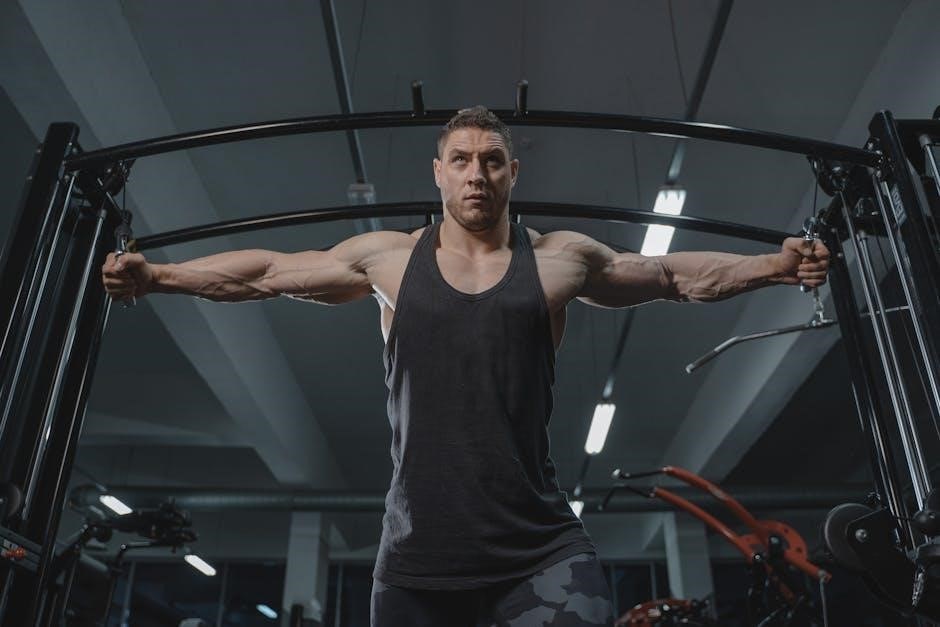
Dumbbell flyes are a valuable addition to a pec strain rehabilitation program, typically outlined in detailed PDF exercise guides. They focus on horizontally adducting the arms, emphasizing the stretch and contraction of the pectoral muscles. However, careful progression is vital, as flyes can place significant stress on the injured area. Begin with very light weights and a limited range of motion, prioritizing controlled movements over heavy lifting.
PDF resources often recommend starting with a neutral grip to reduce shoulder strain. As strength improves, a slight downward arc can be incorporated, but avoid excessive lowering of the dumbbells. Maintaining a slight bend in the elbows throughout the exercise is crucial to protect the elbow joint. Pay close attention to any pain signals; discomfort indicates the weight is too heavy or the range of motion is too extensive. PDF guides will illustrate proper form and provide progression guidelines for safe and effective rehabilitation.
Push-Up Modifications
Push-up modifications are frequently detailed in PDF rehabilitation guides for pec strains, offering scalable exercises to rebuild strength. Traditional push-ups can be too demanding initially; therefore, variations are essential. Wall push-ups are an excellent starting point, reducing the bodyweight load significantly. Incline push-ups, performed with hands elevated on a bench or sturdy surface, further decrease the difficulty.
PDF resources often illustrate knee push-ups as the next progression, maintaining proper form while lessening the strain. Focus on controlled descent and ascent, engaging the pectoral muscles throughout the movement. Avoid arching the back or flaring the elbows. As strength increases, gradually lower the incline or transition to full push-ups, always prioritizing pain-free movement. PDF guides emphasize listening to your body and progressing only when comfortable, ensuring a safe and effective recovery process.
Scapular Squeeze Exercises
Scapular squeeze exercises are a cornerstone of pec strain rehabilitation, frequently outlined in detailed PDF guides. These exercises focus on strengthening the muscles surrounding the shoulder blades, promoting proper posture and stability – crucial for supporting pectoral muscle recovery. They counteract the rounded shoulder posture often associated with pec strains and desk work.
PDF resources typically demonstrate performing these squeezes by sitting or standing with good posture, then drawing the shoulder blades together as if pinching a pencil between them. Hold the squeeze for several seconds, focusing on engaging the rhomboids and trapezius muscles. Avoid shrugging the shoulders upwards during the movement. These exercises are low-impact and can be performed multiple times daily. PDF guides often include variations, such as resistance band scapular squeezes, to progressively increase the challenge as strength improves, aiding in a full recovery.

Advanced Exercises & Considerations
PDF rehab guides detail advanced moves like plyometrics and rotator cuff work. Proper form is vital; PDFs emphasize controlled movements to prevent re-injury during progression.
Plyometric Push-Ups (Advanced)
Plyometric push-ups represent a high-intensity exercise, suitable only during the later stages of pec strain rehabilitation, as detailed in advanced PDF guides. These involve explosively pushing the body upwards, creating a brief airborne phase before landing softly. This dynamic movement builds power and enhances muscle reactivity, crucial for returning to functional activities.
However, careful consideration is paramount. Individuals must possess sufficient strength and control before attempting plyometrics. PDF resources often recommend mastering standard push-up variations first. Proper technique is non-negotiable; maintaining a stable core and controlled descent minimizes the risk of re-injury. Start with a low volume – perhaps 3 sets of 5 repetitions – and gradually increase as tolerated.
Monitoring for pain is essential. Any discomfort during or after the exercise signals a need to regress to less demanding movements. PDFs frequently include modifications, such as performing plyometric push-ups with hands elevated on a stable surface, to reduce the intensity.
Rotator Cuff Strengthening
Rotator cuff strengthening is integral to pec strain rehabilitation, often outlined in comprehensive PDF exercise programs. While a pec strain directly affects the pectoral muscles, the rotator cuff plays a vital role in shoulder stability and movement patterns that influence pec function. Weakness or imbalance in the rotator cuff can contribute to both the initial injury and hinder recovery.
PDF guides typically recommend exercises like external rotations, internal rotations, and scaption, utilizing light resistance bands or dumbbells. These target the supraspinatus, infraspinatus, teres minor, and subscapularis muscles. Proper form is crucial; focus on slow, controlled movements and avoid compensating with other muscle groups.
Progressive overload is key. As strength improves, gradually increase the resistance or repetitions. PDF resources emphasize the importance of addressing any identified muscle imbalances. Strengthening the rotator cuff not only supports shoulder health but also optimizes pec muscle performance and reduces the risk of future strains.
Core Stabilization Exercises
Core stabilization exercises are surprisingly crucial components of pec strain rehabilitation, frequently detailed within PDF rehabilitation protocols. A strong core provides a stable base for all upper body movements, including those involving the pectoral muscles. Weak core muscles can lead to compensatory movement patterns, increasing stress on the chest and shoulder region, potentially exacerbating the strain.
PDF guides commonly feature exercises like planks, side planks, bird-dogs, and dead bugs. These exercises focus on engaging the transverse abdominis, obliques, and lower back muscles. The emphasis is on maintaining a neutral spine and preventing excessive movement or rotation.
Progressive difficulty is essential; start with modified versions and gradually increase the hold time or repetitions. Integrating core work improves overall body mechanics, enhances posture, and contributes to a more efficient and pain-free recovery from a pec strain. A stable core supports proper shoulder function and reduces the risk of re-injury.
Importance of Proper Form
Proper form during pec strain rehab exercises, as meticulously outlined in most PDF rehabilitation guides, is absolutely paramount to a successful recovery. Incorrect technique can not only hinder progress but also potentially worsen the injury, leading to increased pain and prolonged healing times. Focusing on controlled movements and maintaining correct posture is far more beneficial than lifting heavier weights with compromised form.
PDF resources often include detailed illustrations and descriptions of each exercise, emphasizing key alignment points. Pay close attention to scapular positioning, core engagement, and joint angles. Avoid compensating with other muscle groups to complete the movement.
If you’re unsure about your form, seeking guidance from a qualified physical therapist is highly recommended. They can provide personalized feedback and ensure you’re performing the exercises safely and effectively. Prioritizing quality over quantity will yield the best long-term results and minimize the risk of re-injury.
Preventing Re-Injury
Preventing re-injury after a pec strain requires a comprehensive approach extending beyond completing a PDF-guided exercise program. Gradual return to activity is crucial; avoid abruptly resuming pre-injury levels of exertion. Continued adherence to a maintenance exercise routine, detailed in many rehabilitation PDFs, strengthens the pectoral muscles and surrounding structures, enhancing stability.
Warm-up thoroughly before any physical activity, incorporating dynamic stretching to prepare the muscles. Pay attention to your body’s signals – pain is a warning sign. Proper lifting techniques and avoiding overtraining are essential preventative measures.
Strengthening the rotator cuff and scapular stabilizers, often included in advanced PDF protocols, contributes to shoulder stability and reduces strain on the pec muscles. Consistent core engagement also provides a solid foundation for upper body movements, minimizing injury risk. Long-term commitment to these principles is key.
Resources & Further Information
PDF resources offer detailed pec strain rehab exercises. Consult a qualified physical therapist for personalized guidance and explore online databases for support.
Finding a Qualified Physical Therapist
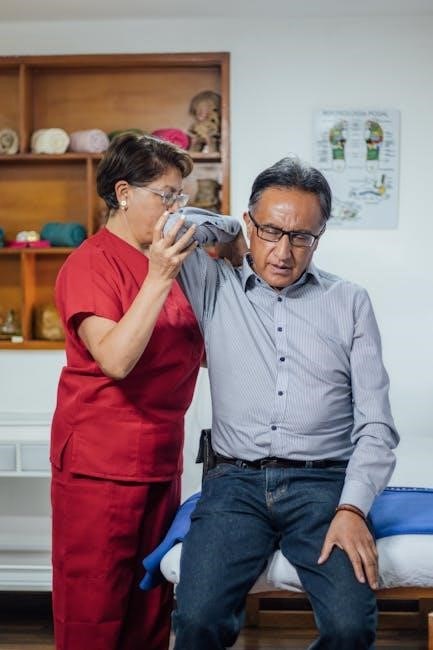
Locating a skilled physical therapist is crucial for effective pec strain rehabilitation, especially when utilizing PDF exercise guides. Seek therapists specializing in musculoskeletal injuries and sports rehabilitation. Verify their credentials – look for licensed professionals with certifications from reputable organizations like the American Physical Therapy Association (APTA).
During your initial consultation, discuss your injury history, activity level, and goals. A thorough assessment will help the therapist create a tailored program, supplementing any PDF-based exercises. Don’t hesitate to ask about their experience with pec strain rehab and their approach to treatment.
Consider factors like clinic location, appointment availability, and insurance coverage. Reading online reviews can provide insights into other patients’ experiences. A good therapist will empower you with knowledge, ensuring you understand each exercise and its purpose, maximizing your recovery potential beyond simply following a PDF.
Recommended PDF Resources for Pec Strain Rehab
Numerous PDF resources offer guidance for pec strain rehabilitation, but discerning quality is key. Look for materials developed by accredited physical therapy organizations or qualified medical professionals. Many university sports medicine departments provide downloadable rehabilitation protocols outlining progressive exercises.
Search for PDFs detailing phased approaches – acute, subacute, and remodeling – mirroring a comprehensive rehab program. These should include clear instructions, illustrations, and modifications for varying pain levels. Beware of generic resources lacking individualized guidance; a therapist’s assessment is paramount.
Reliable sources often emphasize proper form and progression. Consider PDFs that incorporate scapular stabilization and rotator cuff exercises alongside pectoral-focused movements. Remember, a PDF is a supplement, not a replacement, for professional evaluation and personalized treatment. Always prioritize safety and listen to your body while following any PDF exercise plan.
Long-Term Maintenance Exercises
Sustaining pectoral health post-rehabilitation requires consistent effort. Incorporate maintenance exercises 2-3 times weekly, focusing on strength, flexibility, and stability. Continue scapular squeezes and rotator cuff strengthening, vital for shoulder mechanics and preventing re-injury. Light resistance band work – horizontal adduction and internal rotation – maintains pec strength without overstressing the tissue.
Regular stretching, including pec major and minor stretches, preserves range of motion and prevents muscle tightness. Consider incorporating modified push-ups or incline chest presses with light weights. Prioritize proper form over lifting heavy loads. Reviewing a pec strain rehab exercises PDF can serve as a helpful reminder of correct techniques.
Listen to your body and avoid pushing through pain. Proactive maintenance minimizes the risk of future strains and supports long-term shoulder and chest health. Consistency is paramount for lasting results.
Be First to Comment